

Call us now
08037736857

 Send Inquiry
Cellulose Filter Papers
MOQ : 11 Pieces
Cellulose Filter Papers Specification
- Diameter
- 110 mm Millimeter (mm)
- Resistance
- Excellent chemical resistance
- Efficiency (%)
- 99.5
- Usage
- Commercial
- Material
- High purity cellulose
- Product Type
- Cellulose Filter Papers
- Thickness
- 0.22 mm Millimeter (mm)
- Color
- White
- Thermal Shrinkage
- Less than 2%
- Working Temperature
- Up to 120°C Celsius (oC)
- Application
- Filtration of laboratory samples, industrial fluids, and solvents
- Porosity
- Medium
- Retention Rate
- Fine particle retention
- Surface Texture
- Smooth
- Ash Content
- Max 0.08%
- pH Range
- 1-9
- Packaging
- 100 sheets/pack
- Moisture Content
- < 7%
Cellulose Filter Papers Trade Information
- Minimum Order Quantity
- 11 Pieces
- Delivery Time
- 1-7 Days
About Cellulose Filter Papers
Banking on our sophisticated processing facility, we are providing our reputed customers an excellent quality range of Cellulose Filter Papers. These filter papers are extensively used for the attributes like high moisture absorbency in different chemical processes. These are made up of low ash content (approx 0.01%) and are non-acidic reactive with any chemical or organic compound and also help in removing suspended particles in the electroplating bath. Offered papers are very safe in electroplating industry. The porosity is approximately 5 micron. This range of Cellulose Filter Papers is available in 100% Cellulose that can control micron from 1-100 micron and is offered in roll and sheet.
Features:
-
High flow rates good absorption
-
Wide chemical applicability, high resist to acid and alkali
-
Chemically stable
-
High temperature resistance
- Electroplating Bath
- Plating Division
- Sparkler Filters
Reliable Laboratory and Industrial Filtration
These cellulose filter papers are engineered to deliver dependable performance for a range of laboratory and industrial filtration tasks. The standard qualitative design and high purity cellulose material ensure consistent fine particle retention with medium porosity, making them suitable for both routine sample filtration and more demanding applications involving various fluids and solvents.
High Capacity and Chemical Resistance
With a high dust holding capacity and excellent chemical resistance, these filter papers endure rigorous conditions while maintaining efficiency. They perform reliably within temperatures up to 120C, displaying minimal thermal shrinkage. Their robust construction is complemented by a smooth texture and low moisture and ash content, ensuring clean, efficient filtration without contamination.
Packaged Convenience for Commercial Use
Ideal for commercial settings, each pack contains 100 sheets, optimizing storage and usage operations. The filter papers are available throughout India for exporters, manufacturers, suppliers, and traders, supporting large-scale and routine filtration requirements seamlessly. Their white color and high-quality finish make them suitable for environments that demand strict standards of cleanliness and efficiency.
FAQs of Cellulose Filter Papers:
Q: How do these cellulose filter papers ensure fine particle retention during filtration?
A: The filter papers are made from high purity cellulose and feature a standard qualitative structure with medium porosity, which enables them to efficiently capture fine particles while allowing fluids to pass through without obstruction.Q: What types of substances can be safely filtered using these papers?
A: These filter papers are suitable for filtering laboratory samples, industrial fluids, and solvents with pH values ranging from 1 to 9. Their excellent chemical resistance allows for safe filtration of a wide variety of substances.Q: When should I use these filter papers for my filtration needs?
A: They are ideal for commercial and laboratory environments whenever high dust holding capacity and effective fine particle retention are required, especially for tasks involving moderate to high-volume filtration or when working with reactive fluids.Q: Where can I purchase these filter papers in India?
A: These filter papers are available for exporters, manufacturers, suppliers, and traders throughout India. You can source them directly from trusted distributors catering to laboratory and industrial filtration supplies.Q: What is the process for using these filter papers in sample filtration?
A: Simply place the 110 mm diameter filter paper smoothly in the filter holder or funnel, pour the sample to be filtered, and allow gravity or vacuum to facilitate the process. The smooth surface ensures even filtration and minimizes risk of clogging.Q: What benefits do these filter papers offer over other types?
A: They provide 99.5% filtration efficiency, high capacity for dust and particle retention, minimal ash and moisture content, and excellent chemical resistance. Their low thermal shrinkage and ability to work up to 120C make them highly versatile for demanding applications.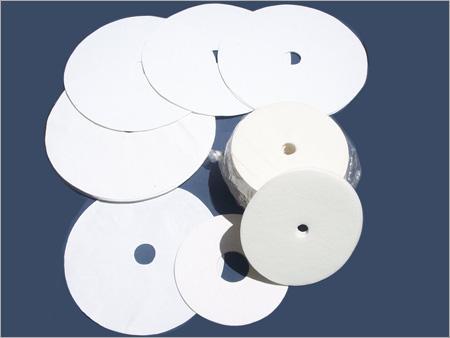
Tell us about your requirement

Price:
Quantity
Select Unit
- 50
- 100
- 200
- 250
- 500
- 1000+
Additional detail
Mobile number
Email

More Products in Electroplating FIlter Paper Category
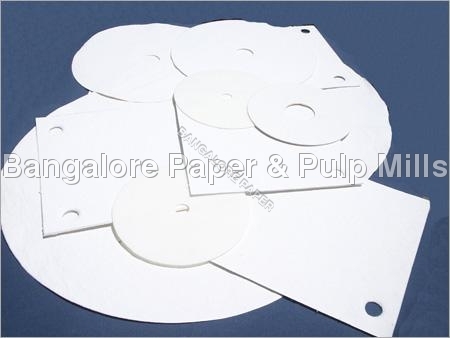
Electroplated Circle Filter Papers
Minimum Order Quantity : 10 Pieces
Usage : Commercial
Product Type : Electroplated Circle Filter Papers
Material : Cellulose
Application : chemistry laboratory and metallurgy industry for electroplating purposes.
Color : White
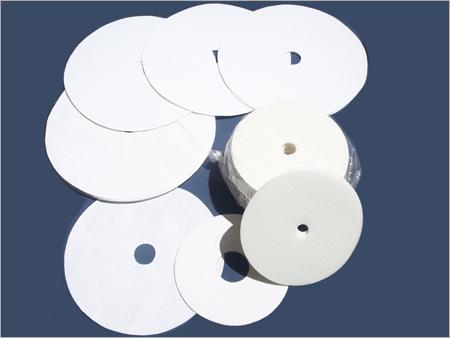
Electroplating Filter Paper
Minimum Order Quantity : 100 Pieces
Usage : Electroplating
Product Type : Electroplating Filter Paper
Material : Cellulose
Application : Electroplating and chemical industries
Color : White

THE BANGALORE PAPER & PULP MILLS
GST : 29ADAPR8530P1ZU
GST : 29ADAPR8530P1ZU
57-A, Hosur Road, Bommasandra Industrial Area, Bengaluru - 560099, Karnataka, India
Phone :08037736857
 Send Inquiry
 Send Inquiry
 Send SMS
THE BANGALORE PAPER & PULP MILLS
All Rights Reserved.(Terms of Use)
Developed and Managed by Infocom Network Private Limited.
Developed and Managed by Infocom Network Private Limited.

