

Call us now
08037736857

 Send Inquiry
Cellulose Filter Pads
Price 19 INR/ Piece
MOQ : 100 Pieces
Cellulose Filter Pads Specification
- Capacity
- High Dirt Holding Capacity
- Efficiency (%)
- 99%
- Diameter
- 340 mm
- Resistance
- Low Pressure Drop
- Usage
- Commercial
- Type
- Cellulose Filter Pads
- Material
- Cellulose
- Product Type
- Cellulose Filter Pads
- Thickness
- 1.5 mm
- Color
- White
- Thermal Shrinkage
- <2%
- Working Temperature
- Up to 80°C
- Application
- Water Treatment
- Shape
- Round
- pH Range
- 3 to 11
- Filtration Grade
- Fine
- Compatible Liquids
- Water, Chemicals, Beverages
- Reusable
- No
- Packaging Type
- Box
- Surface Finish
- Smooth
Cellulose Filter Pads Trade Information
- Minimum Order Quantity
- 100 Pieces
- Delivery Time
- 1-7 Days
About Cellulose Filter Pads
Assisted by our competent team of deft professionals, our firm is presenting a fine quality range of Cellulose Filter Pads. Provided filter pads are extensively used in various industries for filtering purposes. Having very low ash content of 0.01% our filter pads are very safe to use in pharmaceutical and drug industry. These pads are known for their non-toxic composition and are non-reactive to organic compound like methanol, butanol etc. the filter pads have adequate absorbency and efficient filtration capacity. Since these pads are of low ash content (approx 0.01%) and are non-reactive with any organic compound e.g. methanol, butanol etc. Offered filter pads very safe in pharmaceutical and drug industry. These Cellulose Filter Pads are made available for clients in different sizes and porosity to fulfill the needs of our prestigious clients at an industry leading rate.
Features:
-
Easy installation
-
Chemical resistance
-
Smooth finish
-
High temperature resistance
Exceptional Fine Filtration Capability
Designed with advanced cellulose material and a smooth surface finish, these round filter pads excel in fine filtration for commercial water treatment. The high dirt holding capacity ensures extended operational periods without frequent replacements, boosting system efficiency while maintaining consistent flow rates due to the low pressure drop design.
Wide Compatibility and Reliable Performance
Our cellulose filter pads are suitable for a variety of liquids including water, chemicals, and beverages. They perform efficiently across a wide pH spectrum (311) and are resilient to temperatures up to 80C. Their construction ensures less than 2% thermal shrinkage, preserving pad integrity throughout the filtration process.
FAQs of Cellulose Filter Pads:
Q: How are cellulose filter pads used in commercial water treatment applications?
A: Cellulose filter pads are placed within filtration systems to remove fine particles from water, chemicals, or beverages. In water treatment, they enable the efficient removal of contaminants, ensuring the liquid meets quality and purity standards essential for industrial or commercial use.Q: What benefits do these cellulose filter pads offer over reusable alternatives?
A: These single-use pads prevent cross-contamination, ensuring greater hygiene and consistent high filtration efficiency. Furthermore, with a 99% efficiency and high dirt holding capacity, they reduce downtime and maintenance, making them cost-effective in demanding commercial environments.Q: When should these cellulose filter pads be replaced during operation?
A: The pads should be replaced once the flow rate noticeably decreases or when the filters dirt holding capacity is reached, which is often indicated by increased pressure drop. Their non-reusable design makes it essential to install a fresh pad after each filtration cycle.Q: Where can these filter pads be effectively applied besides water treatment?
A: In addition to water treatment, these pads are effective in filtering beverages and various chemical solutions, making them ideal for food and beverage processing plants, laboratory settings, and other industries where fine filtration is required.Q: What is the filtration process with these cellulose filter pads?
A: Liquid passes through the 1.5 mm thick cellulose pads smooth surface, where suspended solids and particulates are trapped, resulting in clarified output. The design ensures minimal thermal shrinkage (<2%) and low pressure drop for optimal system performance.Q: How does the smooth surface finish improve filtration efficiency?
A: A smooth surface finish helps reduce clogging and allows even distribution of liquid across the filter pad. This facilitates effective trapping of fine particulates, improving the consistency and efficiency of the filtration process.Q: What are the main usage and storage guidelines for these filter pads?
A: Store unused boxes of filter pads in a cool, dry environment to maintain pad integrity. During usage, ensure the pad sits flat within the filter housing for uniform filtration. After single use, dispose of the pad according to local regulations as it is not reusable.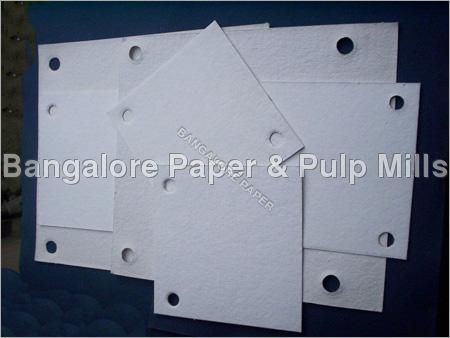
Tell us about your requirement

Price:
Quantity
Select Unit
- 50
- 100
- 200
- 250
- 500
- 1000+
Additional detail
Mobile number
Email

More Products in Sparkler Filter Pads Category
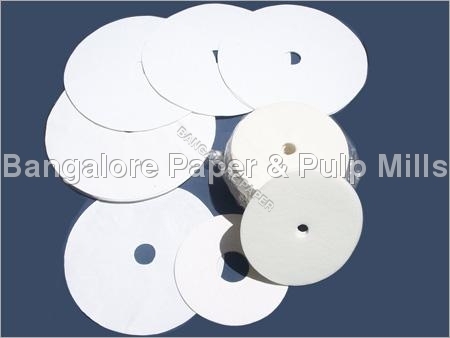
Filter Paper Used in Electroplating Industry
Minimum Order Quantity : 10 Pieces
Usage : Commercial
Product Type : Filter Paper Used in Electroplating Industry
Color : White
Material : Other, Cellulose fiber
Application : Electroplating filtration
Filter Paper
Minimum Order Quantity : 10 Pieces
Usage : Commercial
Product Type : Filter Paper
Color : White
Material : PP
Application : laboratory and industrial settings for various applications, including filtration, separation, and sample preparation.
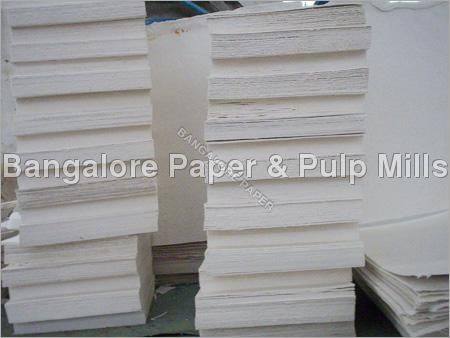
Cotton and PP Filter Paper Pulp
Minimum Order Quantity : 100 Pieces
Usage : Commercial
Product Type : Cotton and PP Filter Paper & Pulp
Color : White
Material : Cellulose
Application : specifically for charcoal and activated carbon filtration.
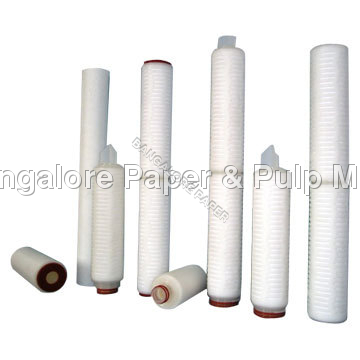
Cartridge Filters
Minimum Order Quantity : 10 Pieces
Usage : Commercial
Product Type : Cartridge Filters
Color : White
Material : Polypropylene
Application : for filtering purpose in chemical, pharmaceutical and metal processing units.

THE BANGALORE PAPER & PULP MILLS
GST : 29ADAPR8530P1ZU
GST : 29ADAPR8530P1ZU
57-A, Hosur Road, Bommasandra Industrial Area, Bengaluru - 560099, Karnataka, India
Phone :08037736857
 Send Inquiry
 Send Inquiry
 Send SMS
 Call Me Free
THE BANGALORE PAPER & PULP MILLS
All Rights Reserved.(Terms of Use)
Developed and Managed by Infocom Network Private Limited.
Developed and Managed by Infocom Network Private Limited.

